
Germany offers a robust and diverse education system designed to cater to children of varying needs and academic abilities. Understanding how the system works, especially as an expat or new resident, is key to ensuring the best opportunities for your child.
Compulsory Education in Germany
- Mandatory Schooling: Children must attend school from the age of six. Home education is generally not permitted, except in rare cases such as prolonged illness.
- Free Education: Most schools in Germany are state-run and free of charge. Private and international schools, which charge fees, are also an option.
- Registration Process: Parents will receive a formal invitation from the local school authority detailing registration dates and procedures. You can also contact the relevant Ministry of Education for additional information.
Understanding Germany’s Federal Education System
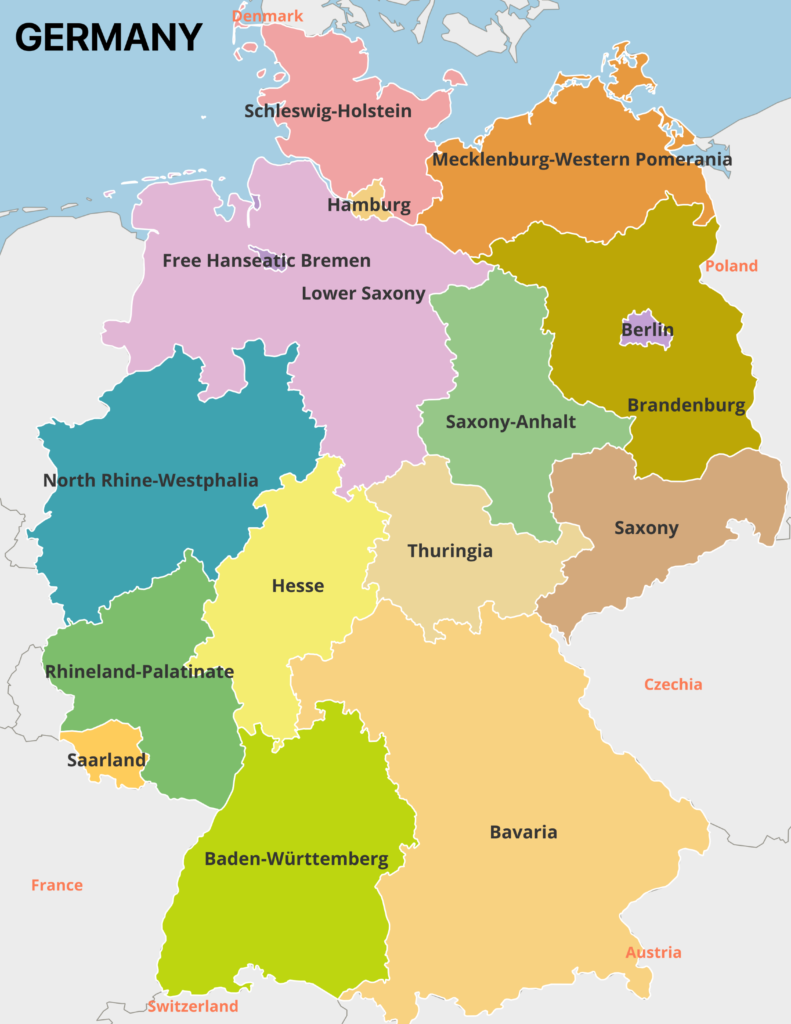
- Regional Differences: Each of Germany’s 16 federal states is responsible for its education policy, leading to some variation in curricula, school names, and teaching materials.
- Standardized Qualifications: Despite regional differences, qualifications like the Abitur (general higher education entrance qualification) are standardized across all federal states, ensuring eligibility for higher education nationwide.
School Structure in Germany
1. Primary School (Grundschule)
- Age Range: Children begin at age six and typically attend grades 1–4 (1–6 in Berlin and Brandenburg).
- Progression: At the end of primary school, parents and teachers collaboratively decide on the most suitable type of secondary education based on the child’s performance and aptitude.
2. Secondary Schools
Secondary education begins after primary school, usually from grade 5 or 7, and offers several pathways:
a. Comprehensive School (Gesamtschule/Gemeinschaftsschule)
- Offers a blend of academic and vocational education.
- Students can earn various qualifications, such as:
- Hauptschulabschluss: First school-leaving certificate.
- Realschulabschluss (Mittlere Reife): Intermediate secondary school-leaving certificate.
- Fachhochschulreife: Entrance qualification for universities of applied sciences.
- Abitur: General higher education entrance qualification.
b. Grammar School (Gymnasium)
- Grades: Typically spans grades 5/7–12/13.
- Focus: Offers an academic curriculum that culminates in the Abitur or Fachabitur, qualifying students for higher education or vocational training.
Vocational Education and Training (VET)
After lower secondary education, students can choose vocational training pathways:
- School-Based Training: Focuses solely on classroom education.
- Dual Education System: Combines classroom learning with practical work experience in a company.
Key Points to Remember
- Mandatory Full-Time Education: Students must complete nine or ten years of full-time schooling, depending on the state.
- Part-Time Education: Beyond this, they may need to complete vocational training or part-time schooling until the age of 18.
- Flexibility: After completing grammar school or vocational training, students can either pursue higher education or enter the workforce.
How to Find the Right School
- School Search Platforms: Federal states provide dedicated websites to help parents filter schools by region, type, and international focus.
- School Websites: For details on curricula, registration processes, and special programs, visit individual school websites.